Showing posts with label Manau-Gododdin. Show all posts

Thursday, 13 November 2014

Manau-Gododdin

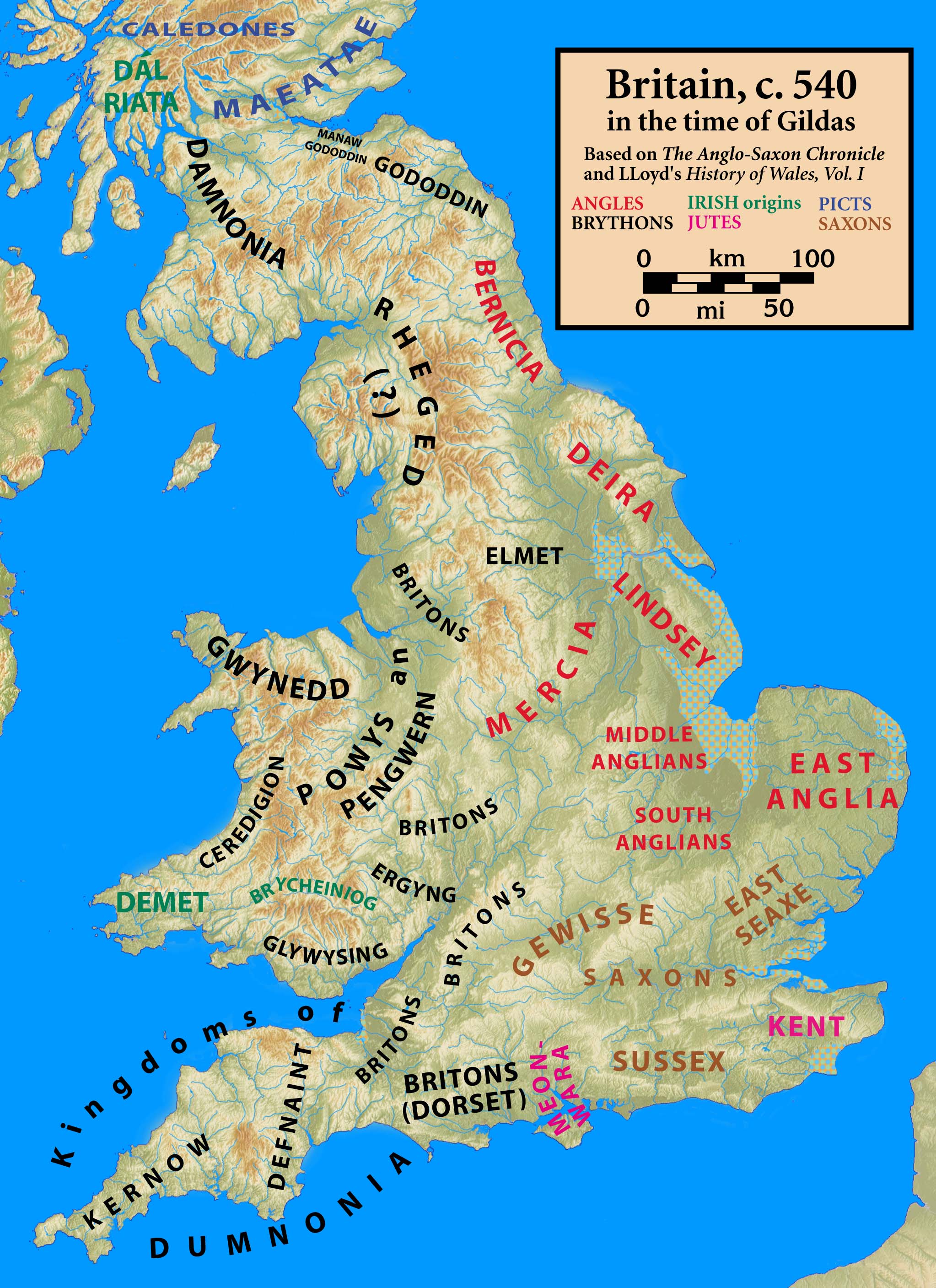
Manau-Gododdin, a tiny sub-kingdom in northern Britain
and a buffer zone between the Picts and Britons.
Located on a narrow strip of land on the south coast of the Firth of Forth, Manau-Gododdin was a small and little-known sub-kingdom of Goutodin. North of the Forth was Pictish Manau, and it is possible that the people of Manau-Gododdin may have been Picts under British Votadini over-lordship. This over-lordship may have stemmed from the early second century when Votadini troops in the pay of Rome were stationed within Manau territory to fend off Pictish attacks. When the Romans withdrew from Britain, the Votadini retreated to the other side of the Forth, but kept hold of Manau-Gododdin.

Manau-Gododdin’s most famous son is undoubtedly Cunedda Wlendig, an early fifth century chieftain and sub-king who migrated to Wales, founded the Kingdom of Gwynedd and started a royal dynasty from which Welsh nobility claimed descent for centuries afterward. By the late fifth century, Manau-Gododdin appears to have lost its independent identity, implying the sub-kingdom had been brought under the direct control of Goutodin. From then, the people of Manau-Gododdin presumably shared the same fortunes as their overlords and it is very likely warriors from Manau-Gododdin were involved in Morgan Bulc’s fruitless efforts to regain Bernaccia in 590 and the disastrous defeat at the Battle of Caltreath in 597.

Squeezed by the Picts expanding southwards and the Northumbrians expanding northwards, Manau-Gododdin fell along with Goutodin in 638 and by the middle of the seventh century had been absorbed into an increasingly powerful Kingdom of Northumbria. Three centuries later, in 975, the Goutodin territories were transferred to the Scottish Crown.

Wednesday, 12 November 2014

Cunedda Wledig (fl. 430 AD)

Cunedda and his band of Romanised Picts travelled south to 
Wales and drove out the Irish who had settled there several
generations earlier. He may have been employed as a 
mercenary by the Romano-British authorities or simply seized 
an opportunity to carve out a kingdom.

Cunedda Wledig was a powerful warrior prince from Manau-Gododdin who migrated to Wales in the early fifth century and founded a dynasty from which Welsh nobility would claim ancestry for centuries afterward.

According to tradition, Cunedda was descended from a line of Votadini chieftains whose Latinised names suggest they ruled in some sort of official Roman capacity north of Hadrian’s Wall. By Cunedda’s time, the Manau-Gododdin was a sub-kingdom of Goutodin and it is likely that Cunedda was some sort of leader or sub-king. Not much is known of his life in the north. Cunedda must have been a charismatic warrior as he was able to rally the beleaguered Romano-British to fight off constant Irish and Pictish raids. Perhaps because of his actions, Cunedda managed to secure a politically advantageous marriage to Gwawl, a daughter of Coel Hen, and is claimed to have had nine sons and at least two daughters.

At some point in the early fifth century, maybe around 430, Cunedda and his warband migrated southwest to Wales. His wife, Gwawl, appears to have gone with him, as did his younger sons. His eldest son, Typaun, remained behind in Manau-Gododdin and presumably inherited whatever role it was that Cunedda relinquished when he left. According to legend, Cunedda was offered land in return for ousting Irish raiders (named as the Ui Liathain from Munster) who had invaded and settled along the Welsh coastline during the last century. Nennius, writing centuries later, wrote that Cunedda and his warband arrived in Wales “and with great slaughter they drove out from these regions the Scotti who never returned again to inhabit them”.

Alternatively, it has been suggested that Cunedda may have sailed down the Irish Sea of his own volition and invaded North Wales, establishing himself a kingdom during the chaos that resulted from a plague that swept southern Britain in 446 and the subsequent Saxon laeti revolt. Northern Wales had been governed by Custennin, a son of Magnus Maximus, but presumably Custennin had either died by this point or unable to put up much resistance. 

With only the westernmost parts of Wales remaining in Irish hands, Cunedda settled down in Gwynedd and founded both a kingdom and a dynasty. His sons went on to found royal dynasties of their own in kingdoms which would later be named after them; Ceredigion, Meirionnydd, Ysfeilion, Rhufoniog, Dunoding, Afflogion and Edeyrnion.